The Philippines
A Sprawling Industrial and Service Gateway to Southeast Asia
With more than 117 million people, a young workforce and a rapidly developing economy, the Philippines represents one of Southeast Asia’s most interesting yet comparatively underdeveloped markets for European industrial suppliers. For German and Dutch Mittelstand companies, this creates an attractive combination: substantial demand for modernization, growing investment and a market where specialized European technology can still establish a strong position.With more than 117 million people, a young workforce and a rapidly developing economy, the Philippines represents one of Southeast Asia’s most interesting yet comparatively underdeveloped markets for European industrial suppliers. For German and Dutch Mittelstand companies, this creates an attractive combination: substantial demand for modernization, growing investment and a market where specialized European technology can still establish a strong position.
An Economy Ready for Industrial Modernization
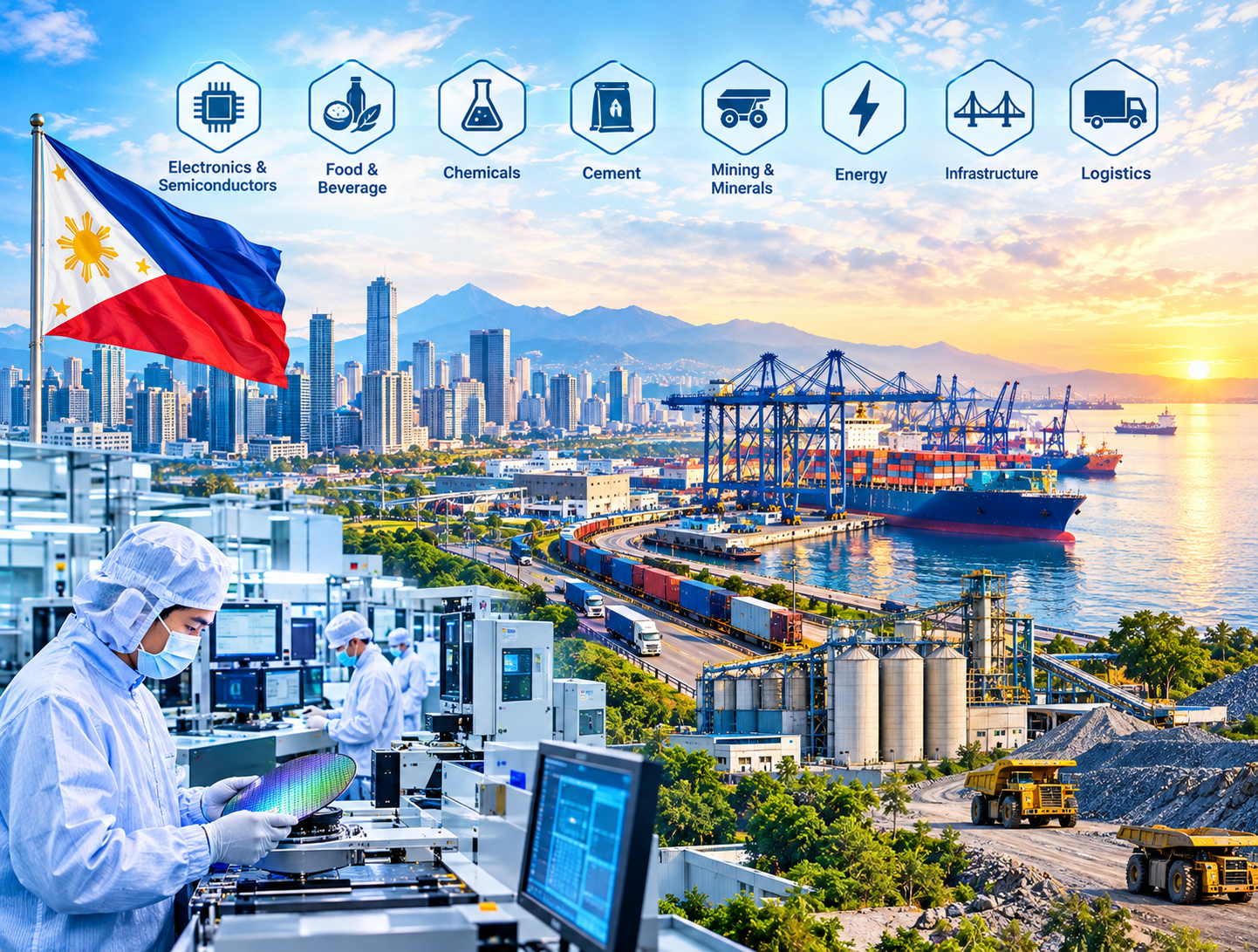
The Philippines is often associated with services and business-process outsourcing, but its industrial base is substantial and becoming more sophisticated. Electronics and semiconductor manufacturing, food and beverage, chemicals, cement, mining and minerals, energy, infrastructure and logistics all create demand for machinery, engineered components and industrial technology.
The government’s 2026 investment priorities explicitly include semiconductors and electronics, machinery and equipment, shipbuilding, iron and steel, cement and processed agricultural products. At the same time, policy is aimed at moving Philippine industry toward higher-value manufacturing and stronger integration into international supply chains.
A Market for European Machinery and Technology
For specialized German and Dutch manufacturers, the opportunity lies less in competing for standardized, price-driven equipment and more in solving difficult industrial problems.
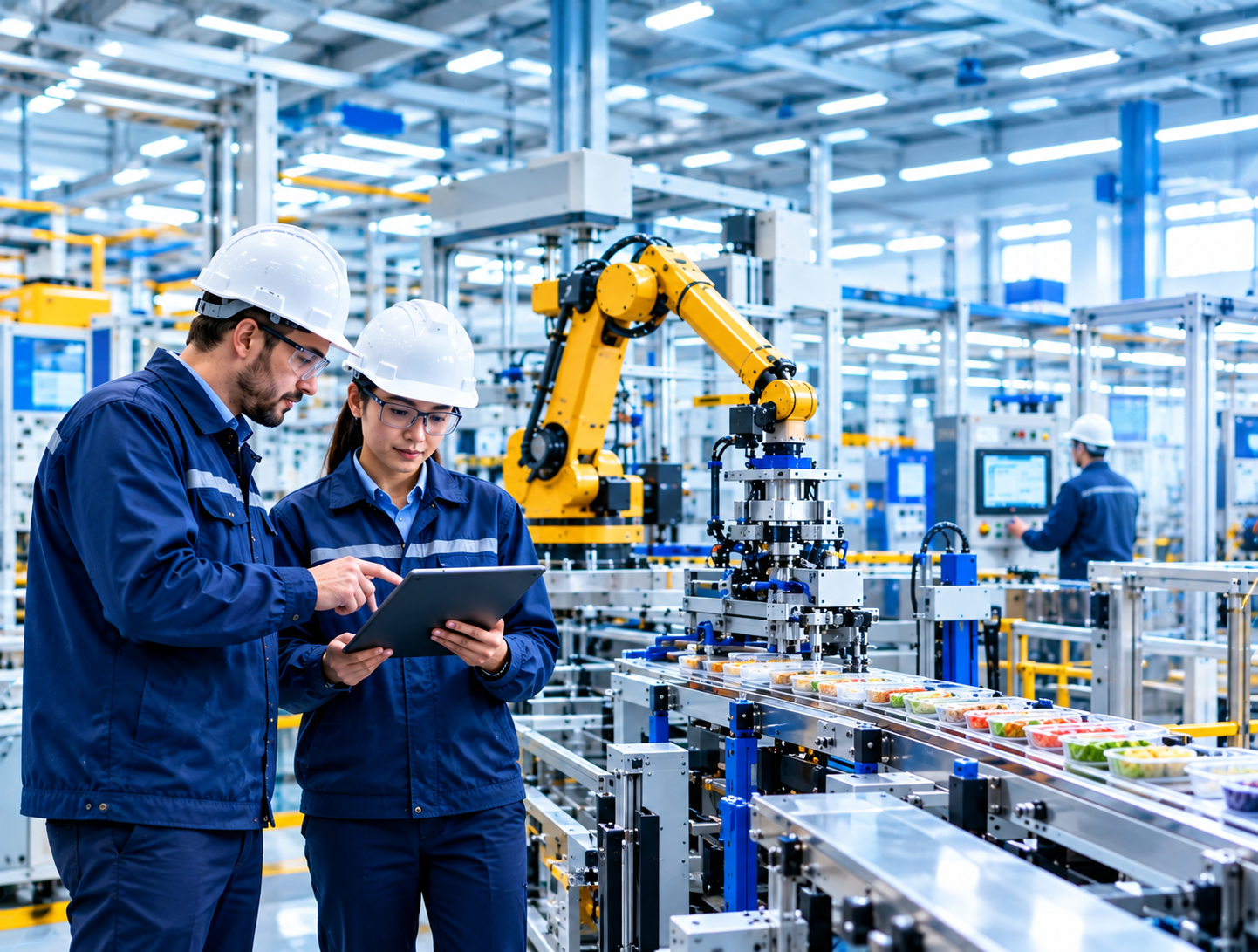
Automation, production machinery, pumps and compressors, process equipment, electrical systems, energy-efficient technologies, water treatment, instrumentation, predictive maintenance, food-processing and packaging machinery are examples of areas where European engineering can offer tangible advantages.
There is already evidence of this demand. German exports of industrial machinery and equipment to the Philippines increased by almost 20% in 2023, even while the country’s overall imports declined. In food processing alone, Philippine imports of machinery increased by 37% in 2024, reflecting the modernization taking place within individual industrial sectors.
Follow the Investment
International investment is creating another layer of opportunity. Manufacturing was among the leading destinations for foreign direct investment in 2024, while the government continues to introduce incentives intended to attract new industrial projects. The trend remains visible in 2026. Investment approvals by the Philippine Economic Zone Authority increased by 94% in the first half of 2026, with electronics manufacturing leading sectoral investment. Particularly relevant for CliffEdge’s European clients: the Netherlands was the largest source of these approved investments, while Germany was also among the leading investor countries. New industrial initiatives are also moving toward more advanced manufacturing. A major industrial development planned for Clark, for example, is intended to accommodate semiconductors, critical-minerals processing, advanced manufacturing and AI-related activities.
A Market for European Machinery and Technology
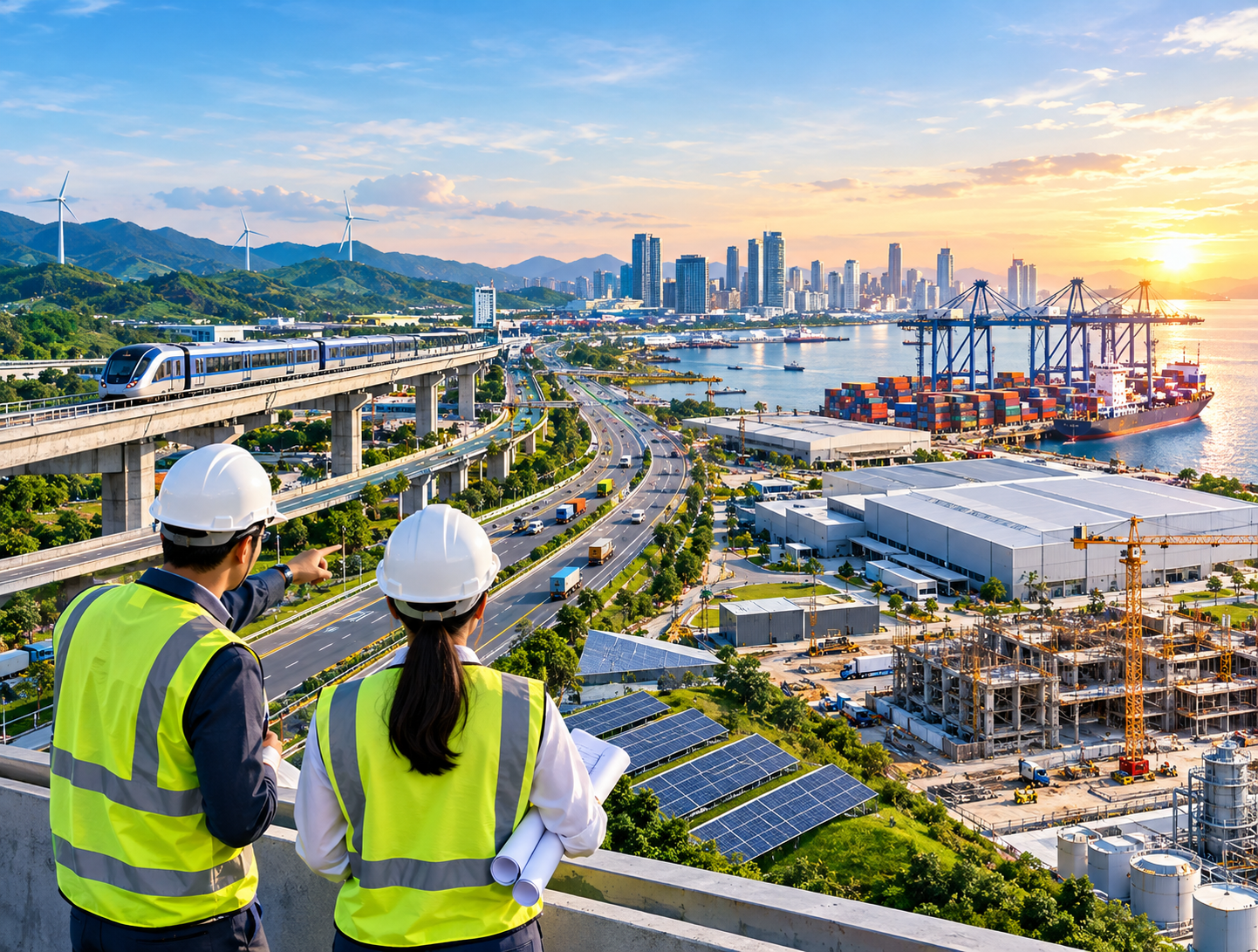
Modernization extends far beyond factories. The Philippines is investing heavily in transport, energy, logistics and other infrastructure. The government’s Build Better More program encompasses more than 200 projects with an indicated value of approximately US$170 billion, with the ambition of supporting logistics, advanced manufacturing and further economic development. For European Mittelstand suppliers, these investments create opportunities both directly and indirectly — through EPC contractors, utilities, industrial developers, local engineering companies and the manufacturers expanding alongside new infrastructure.

An English-Speaking Gateway into ASEAN
The Philippines also offers something that can make market entry considerably easier: English is widely used in business, and the country’s commercial culture has strong international influences. This can lower the initial communication barrier for European companies compared with many other Asian markets. At the same time, the Philippines provides access to the wider Southeast Asian economic region. Trade with Europe is already significant: EU–Philippines trade in goods reached €17.6 billion in 2025, while the stock of EU foreign direct investment in the country stood at €15.4 billion in 2024.
The Opportunity Is Personal — And Local
Being able to communicate in English, however, should not be confused with being able to develop the market remotely. Industrial business in the Philippines remains highly relationship-driven. Identifying the right companies, finding the actual technical decision- makers, qualifying projects and maintaining regular personal contact are essential.
For a European Mittelstand manufacturer, establishing a complete subsidiary for an initially uncertain sales volume can be difficult to justify. A local sales representation offers a much leaner route into the market: build the pipeline, visit customers, develop distributors and partners, support quotations and establish a customer base before committing to a larger organization.
For German and Dutch companies offering specialized machinery, engineered products and industrial technology, the Philippines combines a large domestic market with industrial modernization, major infrastructure investment and increasing demand for higher-performance solutions.
CliffEdge Strategies puts your company on the ground — representing your business locally, developing opportunities and building the customer relationships required to turn a promising market into sustainable revenue.