Central Asia & the Caucasus
Emerging Markets Between Europe and Asia
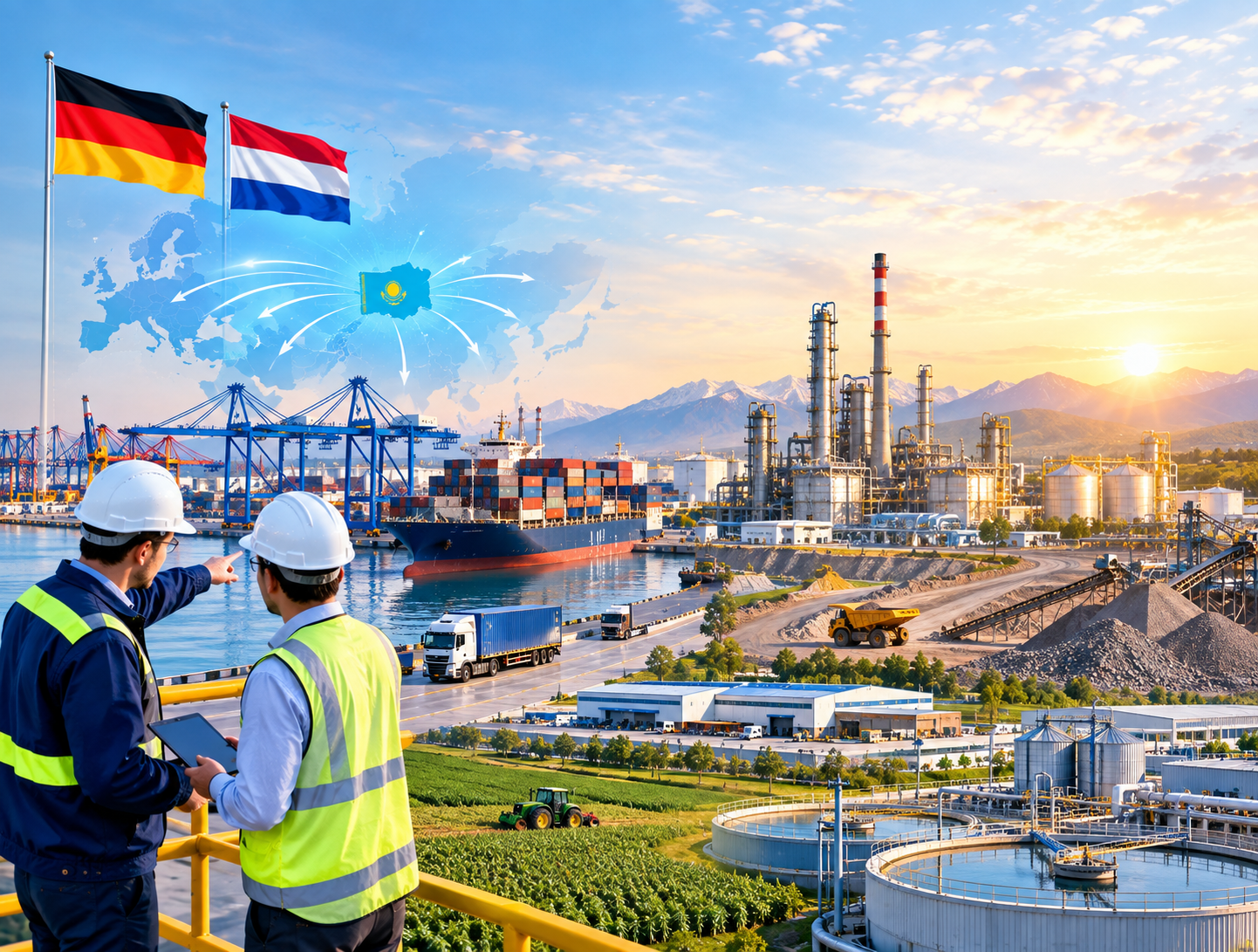
Stretching from the Caspian Sea to the borders of China, Kazakhstan, Uzbekistan, Azerbaijan, Kyrgyzstan, Armenia and Georgia form a diverse but increasingly connected economic region. For German and Dutch Mittelstand companies, these markets offer something increasingly difficult to find elsewhere: rapid modernization, substantial infrastructure investment and strong demand for industrial technology that often cannot be sourced locally.
The opportunity is particularly attractive for manufacturers of specialized machinery, engineered components, process equipment and industrial solutions. Across the region, governments and private companies are investing in modernization while seeking to diversify their economies beyond commodities and traditional industries.
Growing Economies That Need Modern Technology
Central Asia has been one of the faster-growing economic regions in the wider European neighborhood. The EBRD forecast average growth of around 5.2% for Central Asian economies in 2026, following strong expansion in 2025, supported by industrial production, investment and domestic demand.
Yet much of the region’s industrial infrastructure still requires modernization. Mining operations need more productive equipment. Power and water infrastructure needs upgrading. Food producers need modern processing and packaging lines. Chemical, metallurgical and building-material plants need more efficient production technology.
This creates precisely the type of environment in which specialized European engineering can make a difference.
A Natural Market for German and Dutch Engineering
European industrial products already occupy an important position in regional trade. Machinery and transport equipment account for more than half of EU exports to Central Asia. In Kazakhstan alone, machinery and transport equipment represented almost 49% of all EU exports in 2025.
For Mittelstand manufacturers, opportunities can be found across mining and minerals processing, oil and gas, chemicals, power generation, water treatment, food processing, agriculture, cement and building materials, logistics, automation and general manufacturing.
Kazakhstan’s mining industry provides a particularly good example. The country is seeking to move beyond extracting raw materials toward greater domestic processing and value creation, creating demand for equipment, technology and industrial expertise. Germany and Kazakhstan are already cooperating on critical raw materials, and GTAI specifically identifies opportunities for German machinery and technology suppliers.
Kazakhstan and Uzbekistan — The Industrial Heavyweights
Kazakhstan is the region’s largest economy and combines enormous natural resources with mining, metallurgy, oil and gas, chemicals, energy and an expanding manufacturing sector. It is also Germany’s most important trading partner in Central Asia. Around 400 German companies already have a presence in Kazakhstan, demonstrating that German technology and industrial expertise have an established position in the market. Uzbekistan, meanwhile, offers a different growth story. With a population of around 38 million and an ongoing economic transformation, it provides a substantial domestic market alongside opportunities in mining, textiles, food processing, chemicals, fertilizers, energy, construction materials and manufacturing. For European machinery companies, both countries can therefore become anchor markets from which the wider Central Asian region is developed.
Azerbaijan, Georgia and Armenia — The Caucasus Connection
Across the Caspian, Azerbaijan combines its established oil and gas industry with a deliberate effort to diversify into non-oil industries and renewable energy. The EBRD alone has invested approximately €3.75 billion across more than 200 projects in the country and identifies development of the non-oil sector and the green economy as strategic priorities. Georgia offers a comparatively open, internationally oriented economy and occupies a strategic position between the Caspian and Black Seas. Armenia adds opportunities in manufacturing, mining, food production and an expanding technology sector, while its growing partnership with the EU is supporting further economic and regulatory reform. Together, the three countries form an increasingly important commercial bridge between Central Asia, Türkiye and Europe.
The Middle Corridor Is Changing the Map
Perhaps the most important long-term development is the emergence of the Trans- Caspian Transport Corridor — the Middle Corridor.
Connecting Central Asia through Kazakhstan and the Caspian Sea with Azerbaijan, Georgia, Türkiye and Europe, this route is receiving significant international investment. According to the European Commission, trade along the corridor has already quadrupled since 2022 and could triple again by 2030 with the necessary infrastructure investment.
This creates opportunities far beyond transportation itself. New logistics infrastructure requires ports, terminals, rail equipment, cranes, electrical infrastructure, automation, energy systems, workshops, warehouses and industrial services. More importantly, better connectivity makes the entire region more accessible for European manufacturers.
An Economy Ready for Industrial Modernization
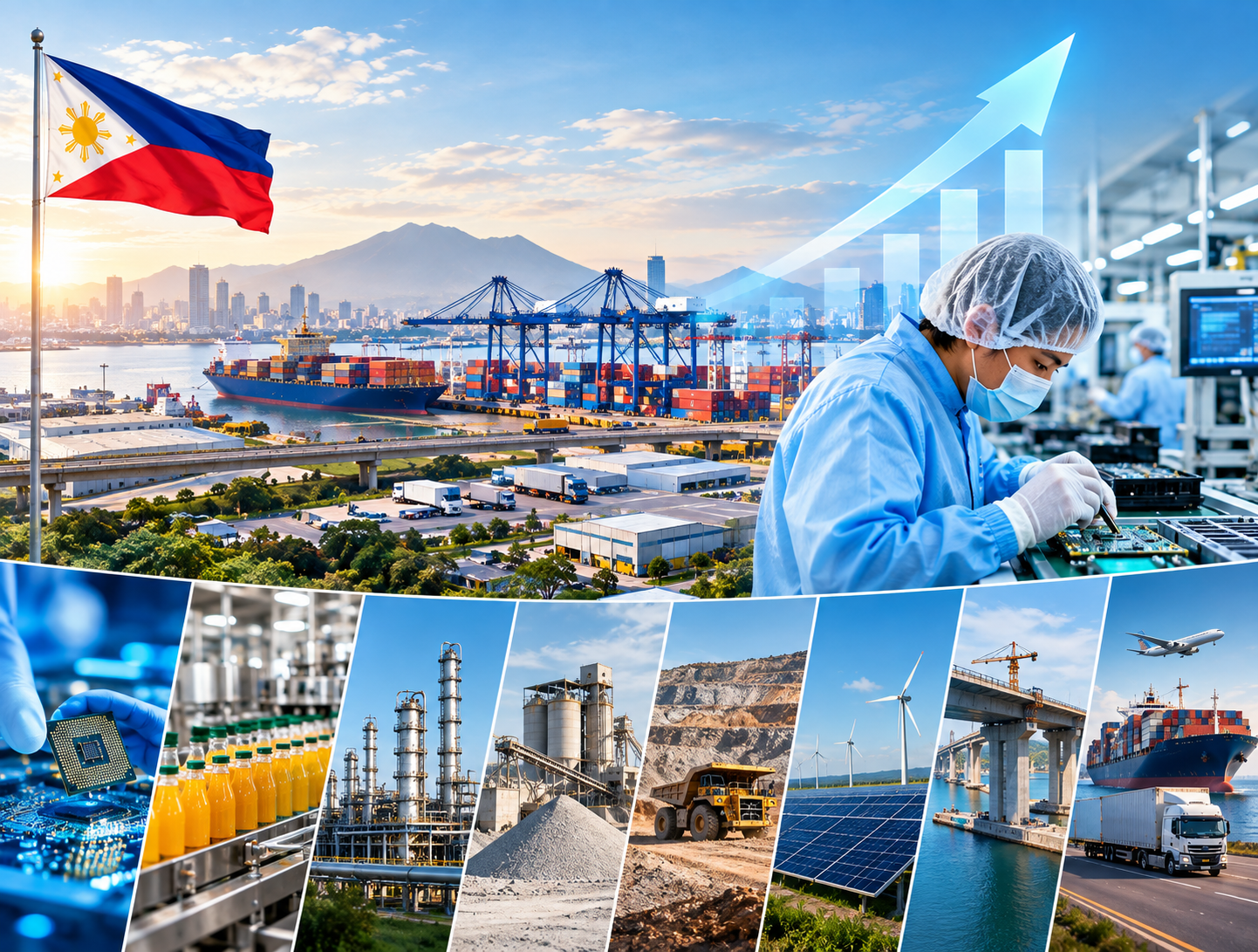
The Philippines is often associated with services and business-process outsourcing, but its industrial base is substantial and becoming more sophisticated. Electronics and semiconductor manufacturing, food and beverage, chemicals, cement, mining and minerals, energy, infrastructure and logistics all create demand for machinery, engineered components and industrial technology.
The government’s 2026 investment priorities explicitly include semiconductors and electronics, machinery and equipment, shipbuilding, iron and steel, cement and processed agricultural products. At the same time, policy is aimed at moving Philippine industry toward higher-value manufacturing and stronger integration into international supply chains.
A Market for European Machinery and Technology
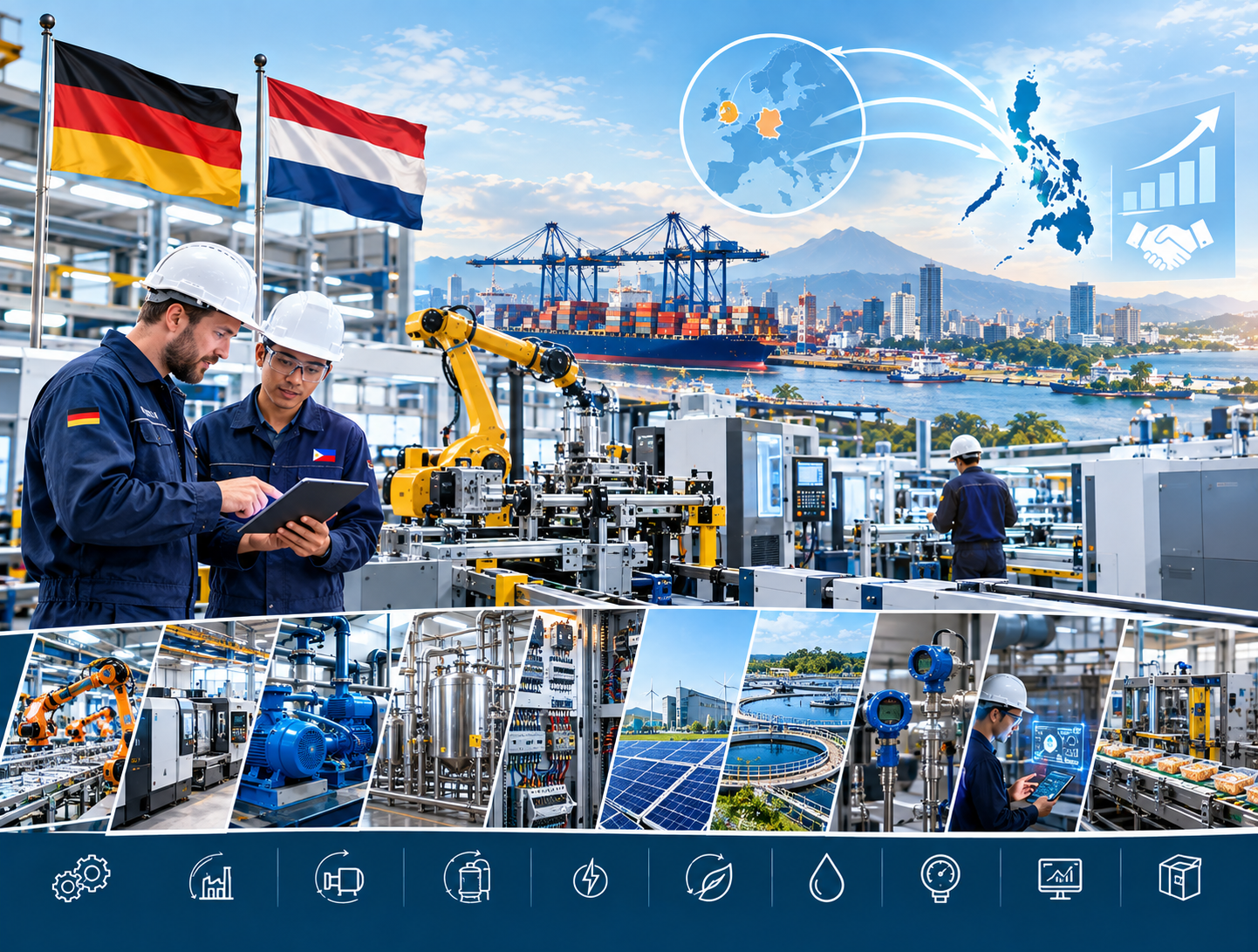
For specialized German and Dutch manufacturers, the opportunity lies less in competing for standardized, price-driven equipment and more in solving difficult industrial problems.
Automation, production machinery, pumps and compressors, process equipment, electrical systems, energy-efficient technologies, water treatment, instrumentation, predictive maintenance, food-processing and packaging machinery are examples of areas where European engineering can offer tangible advantages.
There is already evidence of this demand. German exports of industrial machinery and equipment to the Philippines increased by almost 20% in 2023, even while the country’s overall imports declined. In food processing alone, Philippine imports of machinery increased by 37% in 2024, reflecting the modernization taking place within individual industrial sectors.
Follow the Investment
International investment is creating another layer of opportunity. Manufacturing was among the leading destinations for foreign direct investment in 2024, while the government continues to introduce incentives intended to attract new industrial projects. The trend remains visible in 2026. Investment approvals by the Philippine Economic Zone Authority increased by 94% in the first half of 2026, with electronics manufacturing leading sectoral investment. Particularly relevant for CliffEdge’s European clients: the Netherlands was the largest source of these approved investments, while Germany was also among the leading investor countries. New industrial initiatives are also moving toward more advanced manufacturing. A major industrial development planned for Clark, for example, is intended to accommodate semiconductors, critical-minerals processing, advanced manufacturing and AI-related activities.
A Market for European Machinery and Technology
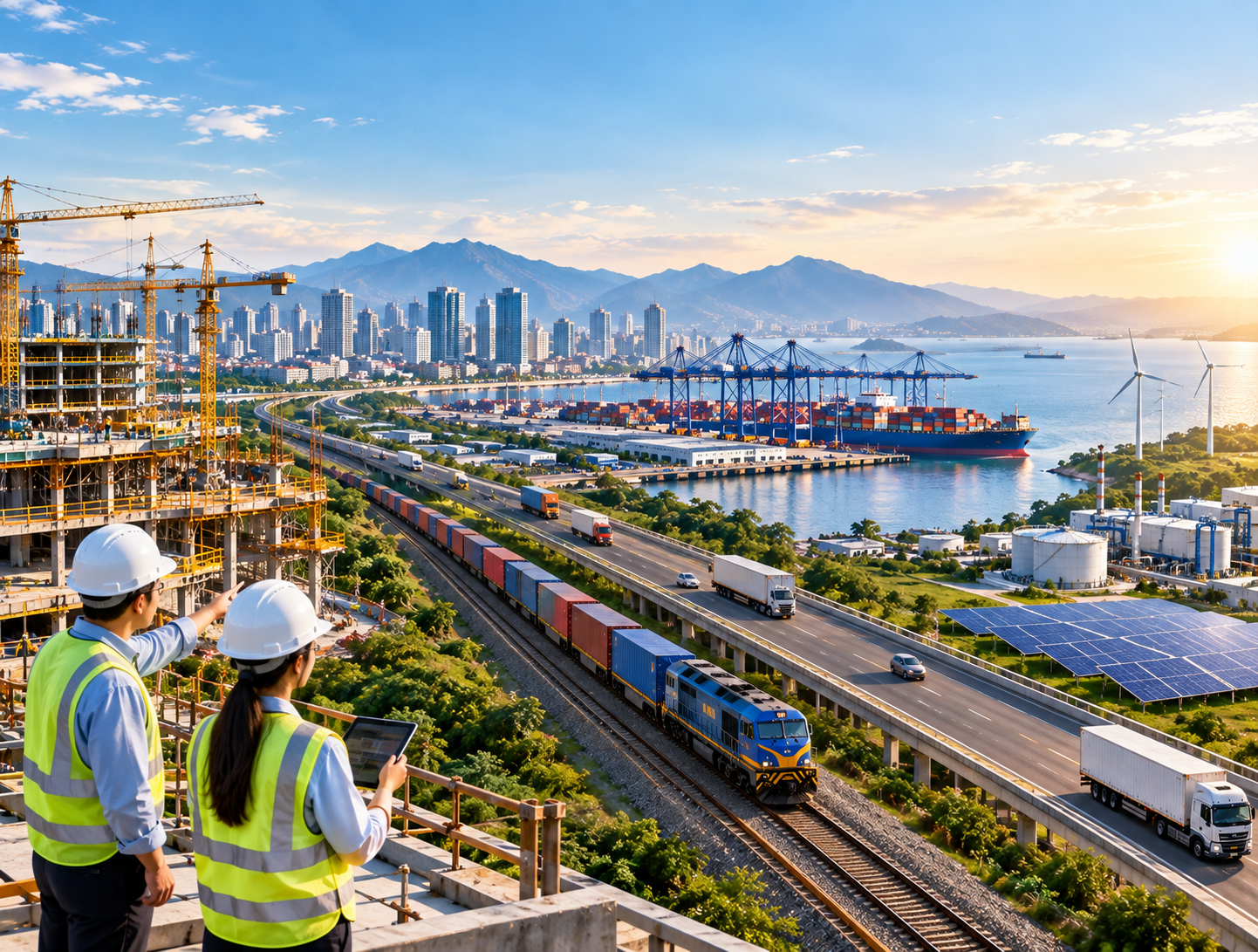
Modernization extends far beyond factories. The Philippines is investing heavily in transport, energy, logistics and other infrastructure. The government’s Build Better More program encompasses more than 200 projects with an indicated value of approximately US$170 billion, with the ambition of supporting logistics, advanced manufacturing and further economic development. For European Mittelstand suppliers, these investments create opportunities both directly and indirectly — through EPC contractors, utilities, industrial developers, local engineering companies and the manufacturers expanding alongside new infrastructure.

An English-Speaking Gateway into ASEAN
The Philippines also offers something that can make market entry considerably easier: English is widely used in business, and the country’s commercial culture has strong international influences. This can lower the initial communication barrier for European companies compared with many other Asian markets. At the same time, the Philippines provides access to the wider Southeast Asian economic region. Trade with Europe is already significant: EU–Philippines trade in goods reached €17.6 billion in 2025, while the stock of EU foreign direct investment in the country stood at €15.4 billion in 2024.